Founder · Product, design and engineering
Karma Plus
People log good deeds they did or witnessed, and together they fill an anonymous heatmap. Web and mobile share one design system, and Claude Haiku checks each submission before it goes live.
- Design thinking
- Next.js
- Expo
- Supabase
- Claude API
- Role
- Founder, product, design and engineering
- Platforms
- App on iOS, Android and web; dashboard for organizations
- Stack
- Next.js, Expo, Supabase, Vercel, Zod, Claude API
- Languages
- English and Spanish
On this page
Overview
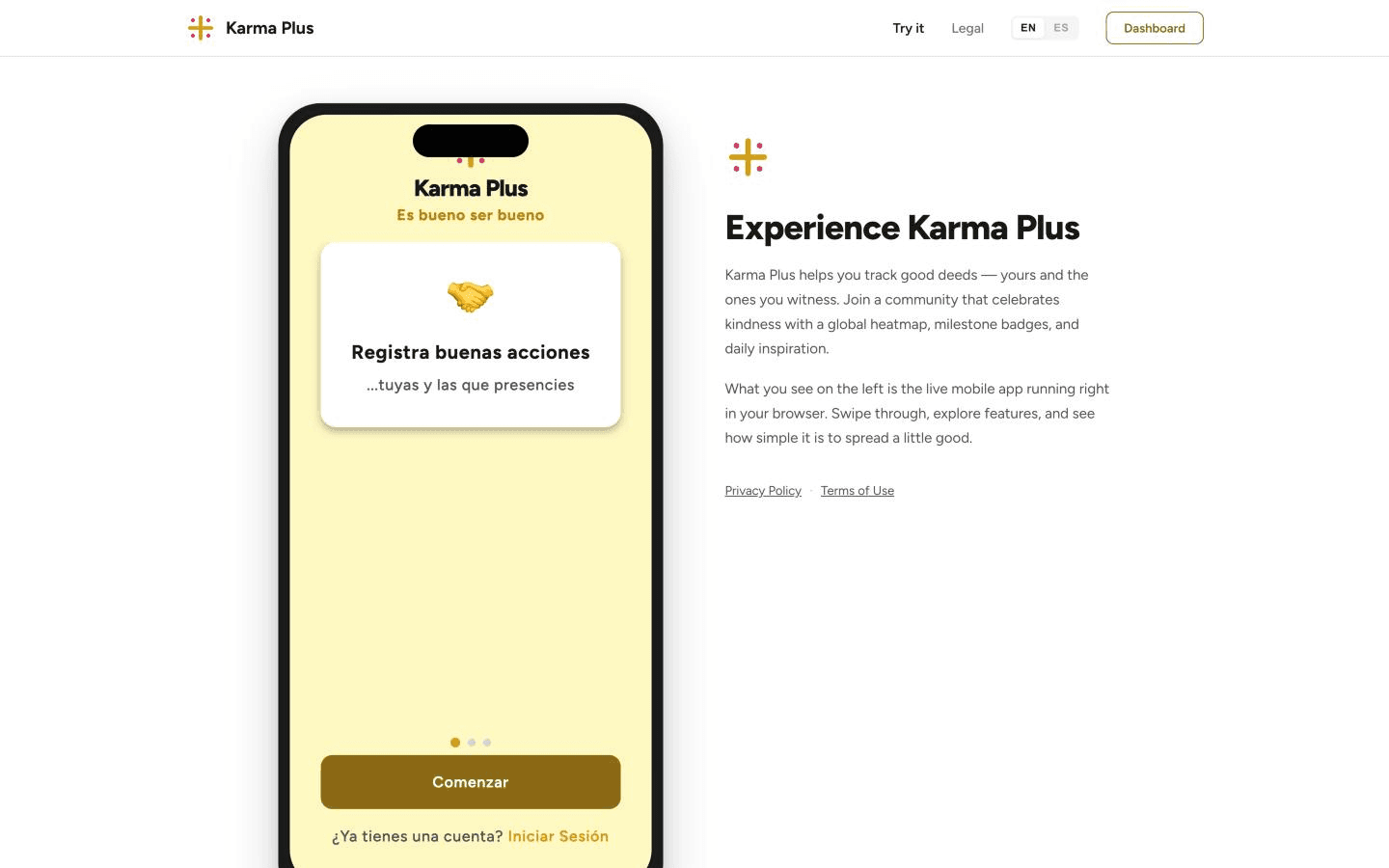
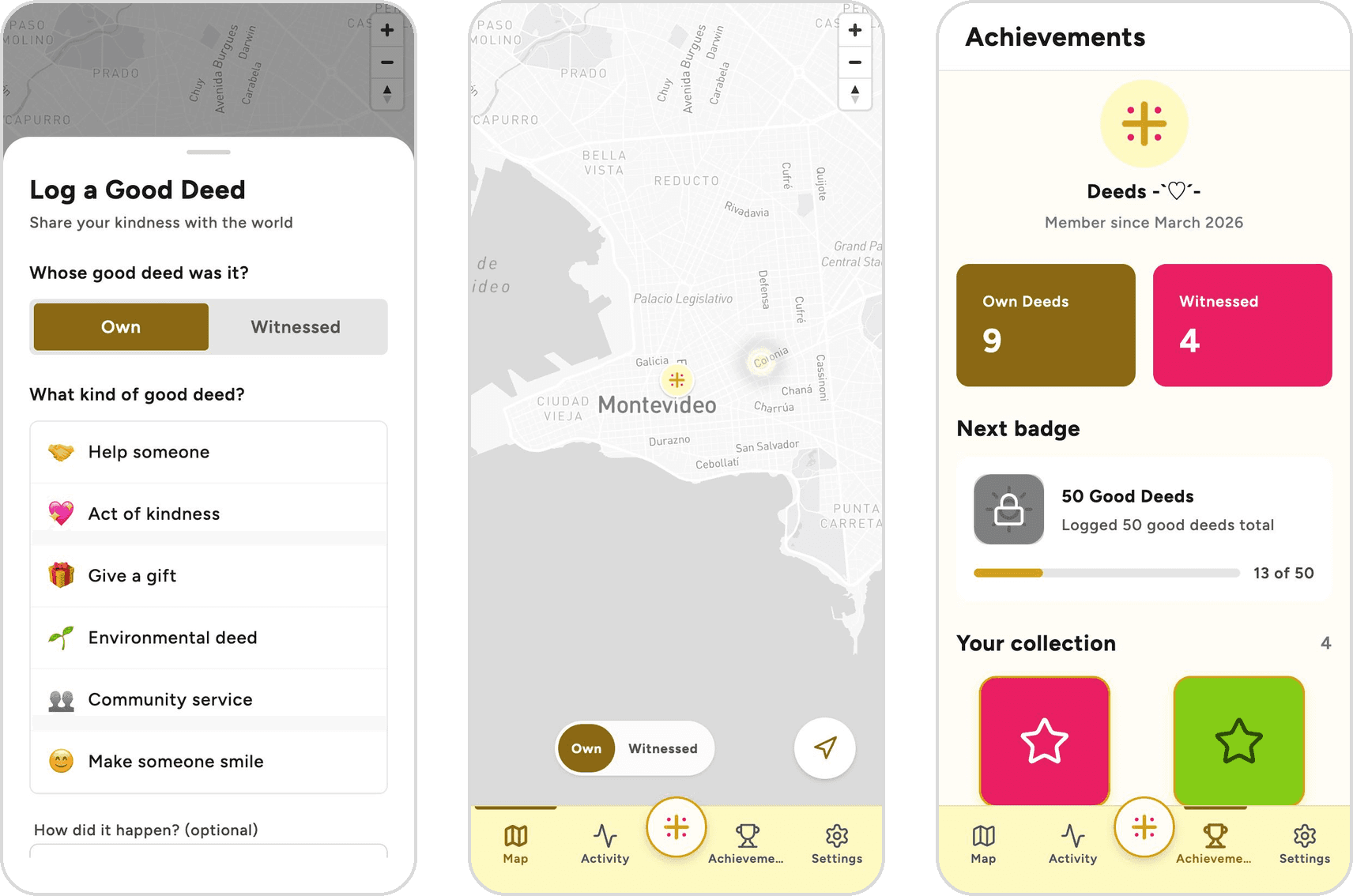
Karma Plus lets people log good deeds they did or saw someone else do. Every deed lands, without names, on a shared heatmap, so anyone can see kindness happening around them.
It also works with organizations. They create events people can join and manage them from their own dashboard.
I started it for my daughter. I want her to grow up in a world where you do not have to guess whether good deeds happen. You can find them, get inspired by them, and build a better community along the way.
Understanding the problem
I followed a design thinking loop: empathize, define, ideate, prototype and test. The goal was an app people would open for a few seconds, feel good about, and trust with what they share.
I started with the people closest to me and shared the idea with family and friends. The problem fit in one sentence: there are not enough visible good examples in the world for my daughter to grow up with.
Product decisions
The decision: beyond individual deeds
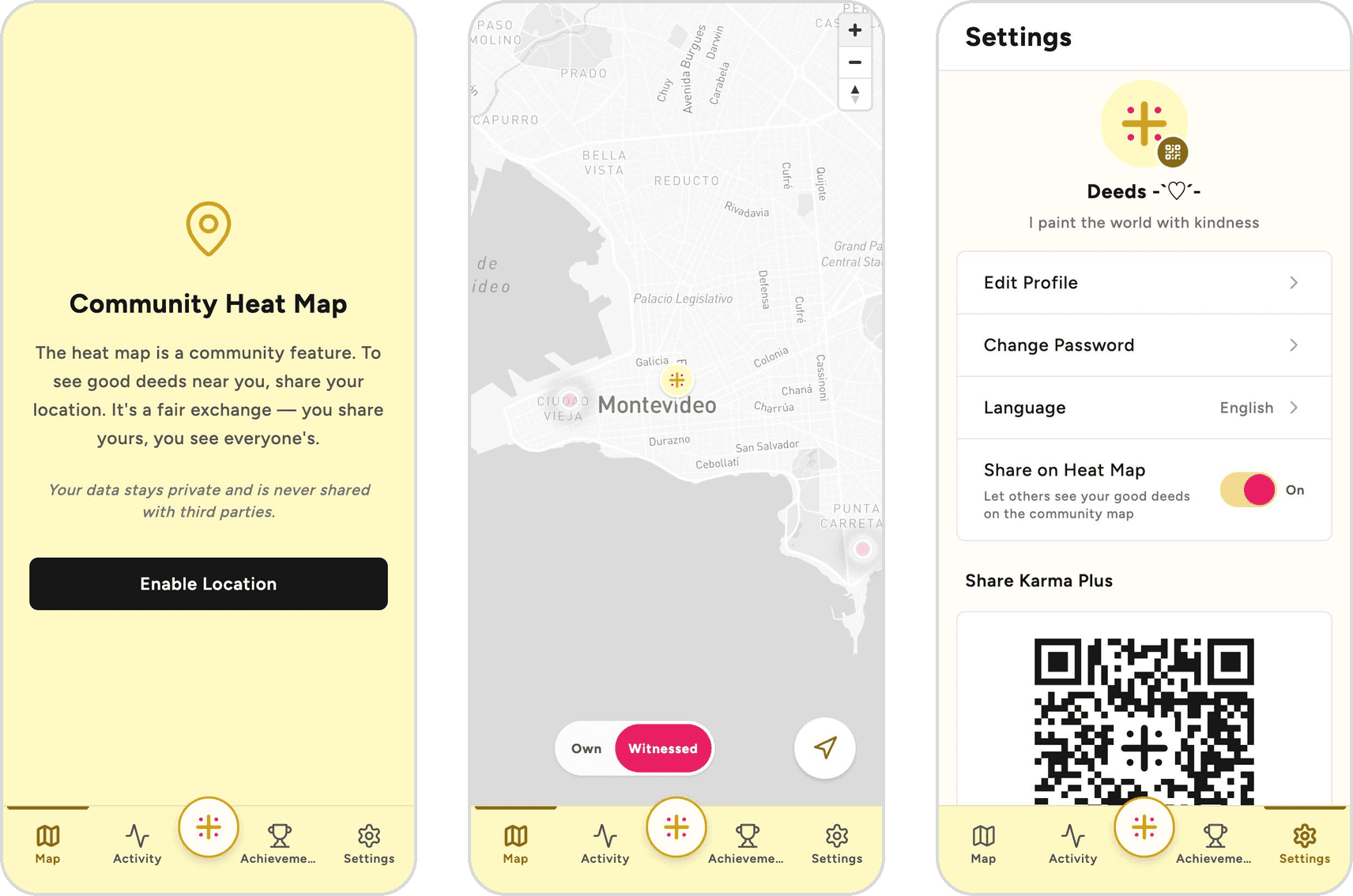
Trust shaped most of the product. A deed is personal, so the map shows where and what, never who.
The decision: not a social network
- In 2.7 million Facebook and Twitter posts, each word about a political out-group raised the odds of a share by 67%.
- Each moral-emotional word in a tweet raised its spread by about 20%.
- People who got likes and retweets for outrage expressed more outrage in later posts.
- Facebook weighted emoji reactions, angry included, five times more than a like. Its own data scientists later found that posts drawing angry reactions were more likely to carry misinformation and toxic content.
Sources
The decision: privacy by design
- Bilingual in English and Spanish, including the store listings.
- Account deletion is simple and public: a bilingual page explains how to request it.
- A custom UI kit and brand tokens, used all the way to the App Store screenshots.
Where AI fits
In the product
In the workflow
The decision
Engineering
- Next.js for the dashboard organizations use, and Expo for the app on iOS, Android and the web, with Zod for validation.
- Supabase for data and auth, with daily database backups running on GitHub Actions.
- EAS Build for store releases on both platforms.
- Vercel hosts both the organizations dashboard and the web version of the app.
Where it is today
Karma Plus is live on iOS and on the web, and in closed testing on Android. Organizations can already create private events.
Next case study
Sets up Claude Code on any repo: it maps the project, pins what works today as a baseline, and generates the agents, hooks and skills to build new features without breaking old ones.